Finding the Human Touch in Digital Design: The Rise of Bridezilla Wedding and Expressive Handwritten Fonts
In an era dominated by sterile interfaces, automated workflows, and algorithmically generated content, a quiet but powerful countermovement has taken hold across the design industry. Creatives, brand strategists, and entrepreneurs are increasingly gravitating toward visual elements that reintroduce warmth, personality, and imperfection into their work. One typeface that captures this shift with remarkable precision is Bridezilla Wedding, a quirky and cute handwritten font that has been steadily gaining attention among professionals who understand that emotional resonance often begins with the smallest design choices.
At first glance, a font might seem like a minor detail in the vast landscape of branding, marketing, and visual communication. Yet typography carries an outsized influence on how audiences perceive a message, a product, or an entire brand identity. The growing interest in fonts like Bridezilla Wedding reflects something deeper than a passing aesthetic preference—it signals a broader cultural and commercial realignment toward authenticity, individuality, and the art of meaningful connection.
What Is Bridezilla Wedding and Why It Resonates
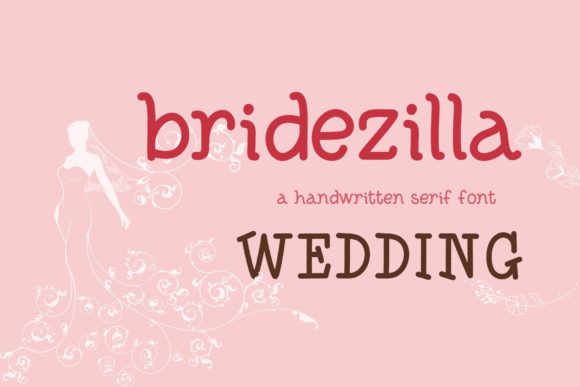
Bridezilla Wedding is a handwritten font that blends playfulness with deliberate charm. Its letterforms are irregular in precisely the right ways—ascenders that stretch with casual confidence, descenders that loop with whimsical flair, and baseline variations that mimic natural penmanship without sacrificing legibility. The font manages to be both quirky and cute, a combination that makes it exceptionally versatile across a range of creative applications. Unlike overly polished script fonts that can feel stiff or impersonal, Bridezilla Wedding embraces the imperfect beauty of real handwriting, giving designs an approachable and distinctly human quality.
The name itself is a clever nod to wedding culture, but limiting this typeface to bridal contexts would be a significant underestimation of its potential. Designers, marketers, and content creators are discovering that Bridezilla Wedding adapts beautifully to branding projects, social media graphics, product packaging, children's merchandise, lifestyle blogs, and event collateral. Its versatility lies in its ability to convey emotion without sacrificing clarity—a balance that many handwritten fonts struggle to achieve.
The Broader Shift Toward Expressive Typography
To understand why fonts like Bridezilla Wedding are capturing attention, it helps to step back and examine the trajectory of typography over the past two decades. The early 2000s saw a proliferation of clean, geometric sans-serif typefaces as brands raced to modernize their identities. Helvetica, Gotham, and Proxima Nova became ubiquitous signifiers of professionalism and minimalism. While these fonts remain valuable, their overuse has created a visual landscape that can feel homogenized, even sterile.
Today, consumers and audiences are experiencing what researchers call "digital fatigue." They scroll through endless feeds of perfectly curated content, much of it rendered in the same handful of safe, neutral typefaces. In response, a growing number of brands and creators are turning to expressive typography as a differentiation strategy. Handwritten fonts, brush scripts, and playful display faces have moved from the periphery to the center of visual communication, precisely because they disrupt the monotony. Bridezilla Wedding fits squarely into this trend, offering a distinctive voice in an increasingly crowded marketplace.
Emotional Branding and the Psychology of Handwriting
Handwritten fonts carry unique psychological associations that machine-precise typefaces cannot replicate. Studies in consumer psychology suggest that handwritten elements in branding evoke feelings of warmth, sincerity, and personal attention. When a potential customer encounters a product label, a website header, or a social media post set in a font like Bridezilla Wedding, the subconscious message is clear: there is a real person behind this communication. In an age of chatbots, automated email sequences, and AI-generated imagery, that perception of human presence has become a valuable commodity.
This explains why industries far beyond wedding planning are embracing handwritten typography. Small-batch food producers use it to signal artisanal craftsmanship. Boutique retailers deploy it to convey personalized service. Coaches, consultants, and service-based entrepreneurs integrate it into their visual identities to appear more approachable and relatable. Even technology companies, in an effort to soften their corporate image, are experimenting with handwritten elements in their marketing campaigns. Bridezilla Wedding serves all of these purposes with a unique blend of charm and legibility that makes it suitable for both headlines and short-form body text.
Changing Workflows and the Democratization of Design
Another factor driving interest in versatile fonts like Bridezilla Wedding is the democratization of design tools. Platforms such as Canva, Adobe Express, and Figma have lowered the barriers to entry for non-specialists. Entrepreneurs managing their own branding, social media managers creating daily content, and freelancers building client presentations all need access to typefaces that deliver professional results without requiring advanced typographic expertise.
In this context, a font that is inherently charming and forgiving becomes a practical asset. Bridezilla Wedding does not demand meticulous kerning adjustments or precise letter-spacing tweaks to look appealing. Its organic, handwritten nature means that minor layout imperfections actually enhance its intended aesthetic rather than detract from it. This quality makes it especially attractive to professionals working under time constraints who still want their output to feel thoughtful and polished.
Practical Applications Across Industries
Consider a few real-world scenarios where Bridezilla Wedding can deliver impact:
- Product packaging: A candle maker uses the font on labels to evoke a handcrafted, small-batch feel that mass-produced competitors cannot match. The quirky letterforms catch the eye on crowded retail shelves or Instagram product shots.
- Social media templates: A content creator builds quote cards and announcement graphics around the font, establishing a recognizable visual style that followers begin to associate with their personal brand.
- Client deliverables: A freelance designer incorporates the typeface into wedding invitation suites, baby shower announcements, or birthday party collateral, offering clients something distinctive that sets their events apart.
- Website design: A lifestyle blogger uses Bridezilla Wedding for post titles, sidebar headings, and call-to-action buttons, injecting personality into an otherwise structured WordPress template.
- Email newsletters: A marketer adds the font to header graphics and promotional banners, increasing open rates by breaking the pattern of generic, corporate-looking communications.
These use cases illustrate how a single typeface can influence multiple touchpoints across a customer journey. The consistency of a recognizable handwritten style builds brand equity over time, reinforcing the perception that a business or creator is genuine, creative, and attentive to detail.
Typography as a Competitive Advantage
In saturated markets, differentiation often comes from unexpected places. While competitors fight over pricing, features, and advertising budgets, the brands that win long-term loyalty frequently do so through intangible qualities like aesthetic coherence and emotional resonance. Typography contributes to both. A thoughtfully chosen font like Bridezilla Wedding can function as a subtle but persistent differentiator, signaling to potential customers that a brand values craftsmanship over shortcuts.
This perspective aligns with the broader movement toward "slow design"—an approach that prioritizes intentionality, sustainability, and human-centered thinking over speed and scale. Slow design does not mean inefficient design; it means design that considers the full experience of the end user. Handwritten fonts, with their echoes of physical pen and paper, naturally align with this philosophy because they evoke a time when communication required deliberate effort. In a world of instant everything, that association carries weight.
The Role of Handwritten Fonts in Inclusivity and Accessibility
An often-overlooked benefit of fonts like Bridezilla Wedding is their role in making design feel more inclusive. Highly formal, corporate typefaces can create psychological distance between a brand and its audience, particularly for consumers who value authenticity over polish. A quirky handwritten font lowers that barrier, communicating in a tone that feels conversational and unguarded. For small businesses and solo entrepreneurs serving local communities, this approachability can be the deciding factor that turns a browser into a buyer.
That said, designers should exercise thoughtful judgment. Handwritten fonts are best used for headlines, logos, short copy, and decorative elements. For long-form reading, pairing Bridezilla Wedding with a clean, readable sans-serif or serif body font creates a harmonious hierarchy that guides the reader without overwhelming them. This combination preserves the expressive impact of the handwritten font while ensuring accessibility and readability—an important consideration as web accessibility standards continue to evolve and gain enforcement.
Future-Proofing Creative Work with Distinctive Assets
As artificial intelligence becomes more integrated into content creation, the value of distinctively human design elements will likely increase. AI-generated imagery and copy can already approximate generic visual styles, but truly unique, personality-driven assets remain harder to replicate convincingly. A font like Bridezilla Wedding, with its specific quirks and irregularities, resists the homogenizing pressure of template-based design and algorithmic production.
Creators who invest in distinctive typography now are building visual libraries that will continue to serve them as the digital landscape evolves. When every competitor has access to the same AI tools and stock resources, the brands that stand out will be those that have cultivated unmistakable identities—identities rooted in choices that cannot be easily duplicated by a prompt or a preset. Font selection, though often treated as an afterthought, is one of the most accessible ways to begin that process.
Integrating Bridezilla Wedding into a Cohesive Design Strategy
For professionals considering how to incorporate Bridezilla Wedding into their work, the key is intentionality. This font excels when used as a focal point rather than a background element. Allow it to anchor a composition, whether as a hero headline on a landing page, the central typographic element on a product tag, or the signature on a branded social media template. Its character benefits from generous white space and complementary design elements that do not compete for attention.
Color selection also plays a role in maximizing the font's impact. Bridezilla Wedding pairs beautifully with soft pastels, warm neutrals, and muted naturals that reinforce its gentle, approachable aesthetic. However, juxtaposing it with bold, saturated colors or dark backgrounds can create a striking contrast that modernizes its feel, proving that handwritten fonts need not be confined to rustic or romantic themes.
Experimentation is encouraged. Try using Bridezilla Wedding for unexpected applications—perhaps as the voice of a tech startup's "About Us" page seeking to humanize its team, or within an educational brand that wants to feel nurturing rather than institutional. The font's versatility means it can adapt to contexts its name might not immediately suggest.
Conclusion: Small Choices, Significant Outcomes
The conversation around Bridezilla Wedding is ultimately about more than one font. It reflects a maturing understanding within the design community that emotional connection is not a soft metric—it is a strategic imperative. In an environment where attention is scarce and trust is fragile, the visual details that communicate care, personality, and humanity can tip the balance between indifference and engagement.
For entrepreneurs refining their brand identity, marketers seeking fresh ways to connect with audiences, freelancers building portfolios that attract ideal clients, and creators cultivating loyal communities, typography offers a direct line to the subconscious impressions that shape perception. Fonts like Bridezilla Wedding remind us that design does not need to be serious to be effective—it needs to be meaningful.
Fall in love with its incredibly versatile style, and you may discover that this quirky and cute handwritten font becomes a quiet cornerstone of your most spectacular designs. The human touch, after all, has never been more valuable than it is right now.